Tuesday, April 30, 2013

11 Colour CD Project


Rolling Stones-Goat Head Soup
Photo Series: Take a series of high contrast B/W photos for a CD cover inspired by music. Your images should be distinctly inspired by a musical genre or style of music. The music is up to you- could be a remake of an already existing CD for your favourite band, or a CD cover for an independent band, or for an imaginary band. Your series will be photographed with black & white film, but printed monochromatically using the colour printer.

Part 1- Planning
Select your music and plan out how you are going to represent it visually. Select 6 songs to inspire your CD cover. Either choose one song for each of the images, or make a booklet representing the overall style of music.

Journal:
  1. 3 Examples of CD covers
  2. Elements of Design- Find one photo for each element of design line, shape, texture, form, colour.  or Principles of Design- rhythm, repetition, balance, contrast, pattern, movement.   
  3. Colour Wheel of Photos- Organize a series of photos n a sequence relating to the colour wheel. see colour wheel below.
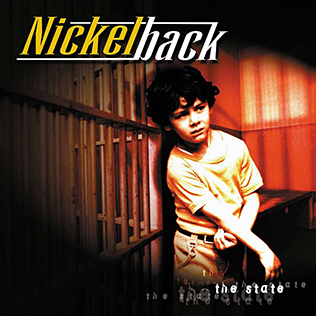
Nickelbac- the state

Part 2  Photographing 3 Elements of Design: Line, Shape, and Texture. You can also explore the Principles of Design: rhythm, repetition, balance, contrast, pattern, movement in your compositions.
Each of your images should purposefully include at least one of the Elements of Design, and/or Principle of Design in each photo. Consider contrast when selecting your elements 
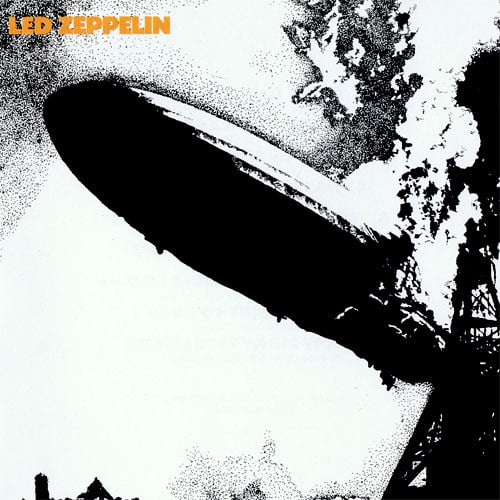
Led Zeppelin- One
Part 3 Develop Negatives with High Contrast: Develop your negatives 1- 2 minutes longer to create high contrast. Then print a BW contact sheet, make sure you have included all of the elements of design.
Cold Play- Parachutes
Part 4
Colour Darkroom: Print three 5 x 5 prints (red, blue, and yellow, OR green, orange, purple). They are square to fit the proportions of a CD cover, so consider the format when you are shooting, you will have to crop off part of your photo. You are to print your photos on colour paper with the colour processor. You are to use colour filters to create mono-chromatic (one colour) colour. Remember that the colour on the enlarger will make the opposite effect on your print. For example, adding a yellow filter creates a purple print.
Celine Dion- Celine

Sunday, April 21, 2013

12 Mini Concentration

For the purpose of this assignment, you are to work with one assigned concept and define it visually through the photographic process. In the end, you should not only have an interesting solution to the concept definition, but have created a series as well. What is a series? A picture series is a group of images related by some aspect held in common (ex. a certain mood, subject matter, technique, function or purpose). It is easy to understand a photographic series by looking at picture stories produced by photojournalists. The viewer gains an understanding of the story by the cumulative effect, not necessarily by the order in which the pictures are presented. This assignment begins with a concept. It is your task to define the concept visually and develop it into an interesting “series” of images. Develop a series of images that are thoughtful and meaningful over the entire term. Try 3 different mediums to experiment with your concentration idea.

11 Monochromatic Photography

Monochrome is defined as an object or image is whose range of color consists of shades of a single color or hue. This type of artistic work is often described to be a painting, drawing, design, or photograph in one color or shades of one colour. Images using only shades of grey (with or without black and/or white) are called grayscale or black-and-white. It may also be used to refer to other combinations containing only tones of a single color, such as green-and-white or green-and-black. For your Monochromatic CD cover project, first listen to music and let sound inspire you, write down ideas you have that can be transferred visually. Then take a series of images on B/W film that represent the music. Develop the film 1.5 - 2 mins longer than normal. And/or shoot in bright sunlight to achieve high contrasted images. Print a contact sheet in B/W and then 6 5 x 5 images on 5 x 8 paper. ***Before you start this project, try a test 5 x 8 print using B/W film using a colour filter.*** monochrome example

Tuesday, February 26, 2013

Toning and Tinting - Grade 11

3 images to be completed for this assignment:

1.  One fully toned image:  Sepia or Blue tone.  Your choice.
2.  One masked image using rubber cement to mask out your selection.
3.  One hand tinted image.

A funny but useful hand-tinting youtube video HERE

Just in case you are wondering...

REASONS for TONING:

  1. AESTHETIC EFFECT AND CREATING MOOD:  toning changes the appearance of the image and helps to create a certain atmosphere the artist wishes to convey.  Portraits, landscapes and sunsets benefit from warmer tones like sepia.  Snow scenes, sea scapes, night views, mechanical images suit the use of blue toners.
  2. ADDITIONAL PROTECTION:  Some toners convert or coat the silver image giving it greater resistance to damage from external contaminants.
  3. INCREASED MAXIMUM DENSITY:  Some toners increase print density (blue and selenium)
  4. DIFFERENT OVERALL PRINT COLOUR:  Dilute toning baths alter the colour of a print appealing to personal taste.


Monday, February 18, 2013

Sharkwater & Oceans

Rob Stewart, photographer, oceanographer, videographer, author, diver will be visiting LFAS on Friday, March 1st @ 7pm ($15). His feature documentary film Sharkwater will be presented in the Chief Sepass Theatre on Friday February 22nd also at 7pm ($1 minimum donation). In class, we will be watching Sharkwater and exploring various aspects of the ocean to gain a better understanding of the underwater world before he arrives.

Questions about Sharkwater:
  1. What are some myths and misconceptions about sharks?
  2. What is the problem with this?
TEDtalks: Brian Skerry "Reveals ocean's glory and horror"

  1. Identify one other BIG issue/concern that is presented in Sharkwater or Brian Skerry's Ted Talk.
  2. How can we (society) help/solve this problem/issue?
  3. How will you help solve this problem issue? 
  4. Think of a question you can ask Rob Stewart when he comes to LFAS.

  1. Watch one of the following TEDtalks about the ocean, or a documentary about the ocean and write a short summery about the information that was presented.
  2. Identify the main concern(s).
  3. List some of the sollutions that you learned, or think of some of your own.
TEDtalks: Mike deGruy "Hooked by an octopus"
TEDtalks: Jeremy Jackson "How we wrecked the ocean"
TEDtalks: Sylvia Earle "To protect our oceans"
TEDtalks: Capt. Charles Moore "On the seas of plastic"
TEDtalks: Simon Berrow "How do you save a shark you know nothing about"

Sunday, February 3, 2013

12s Wrecking Film

Alternative Film Developing Processes-> Creating Mood in Photography
Scratching Negatives
Caffenol Developing

Expired Film
Red Scale


Reticulation

Cross Processing

Some other techniques-
  • Dip or Spaghetti Film Developing
  • Homemade Developer ie. Caffinol
  • Chrome w/ BW
  • Red Scale
  • Scratching, Burning, Mangling Negatives
  • Over/Under Exposing
Research 3 alternative film processes, define, explain what they are and how to do it, gather photo examples for your journal and try one or more for a random roll, print a contact sheet and at least one print for your journal.

Monday, January 14, 2013

Photoshop Tutorials

Try 3 Photoshop Tutorials from the booklet provided Save As another document name into new folder:
  1. Painted in Image
  2. Burnt Edges
  3. Traced Edges